Key Takeaways
- DIY flooring projects help homeowners upgrade interiors while reducing renovation costs.
- Laminate flooring offers affordability, durability, and stylish wood-look finishes for everyday spaces.
- Vinyl plank flooring provides strong water resistance, making it ideal for kitchens, bathrooms, and busy households.
- Engineered wood flooring combines the appearance of real hardwood with improved stability and durability.
Flooring has a powerful impact on how a home looks, feels, and functions. A tired floor can make an entire room feel outdated, while a fresh upgrade can instantly create a cleaner, brighter, and more modern atmosphere. The best part is that homeowners no longer need expensive contractors or large renovation budgets to achieve impressive results.
Modern DIY flooring options are designed to be practical, durable, and beginner-friendly. Whether someone wants a sleek, contemporary finish, a warm wood-style appearance, or a quick, low-cost refresh, there are flooring solutions for nearly every home and lifestyle.
Instead of taking on overwhelming renovations, many homeowners now prefer manageable DIY flooring upgrades that improve both style and usability one room at a time.
1. Why DIY Flooring Projects Are More Popular Than Ever
DIY flooring has become increasingly popular because it allows homeowners to improve their homes while keeping renovation expenses under control. Professional installation can significantly increase project costs, especially in larger spaces. Handling the work independently creates more flexibility and helps homeowners stay within budget.
Another reason for its popularity is convenience. Modern flooring products are far easier to install than older materials. Click-lock systems, floating floors, and peel-and-stick designs simplify the entire process, even for beginners.
DIY flooring also gives homeowners the freedom to upgrade gradually. Instead of renovating an entire property at once, rooms can be refreshed one at a time, making the process feel far more practical and less stressful.
Small flooring changes often create surprisingly dramatic visual improvements.
2. Laminate Flooring: Stylish, Affordable, and Easy to Install
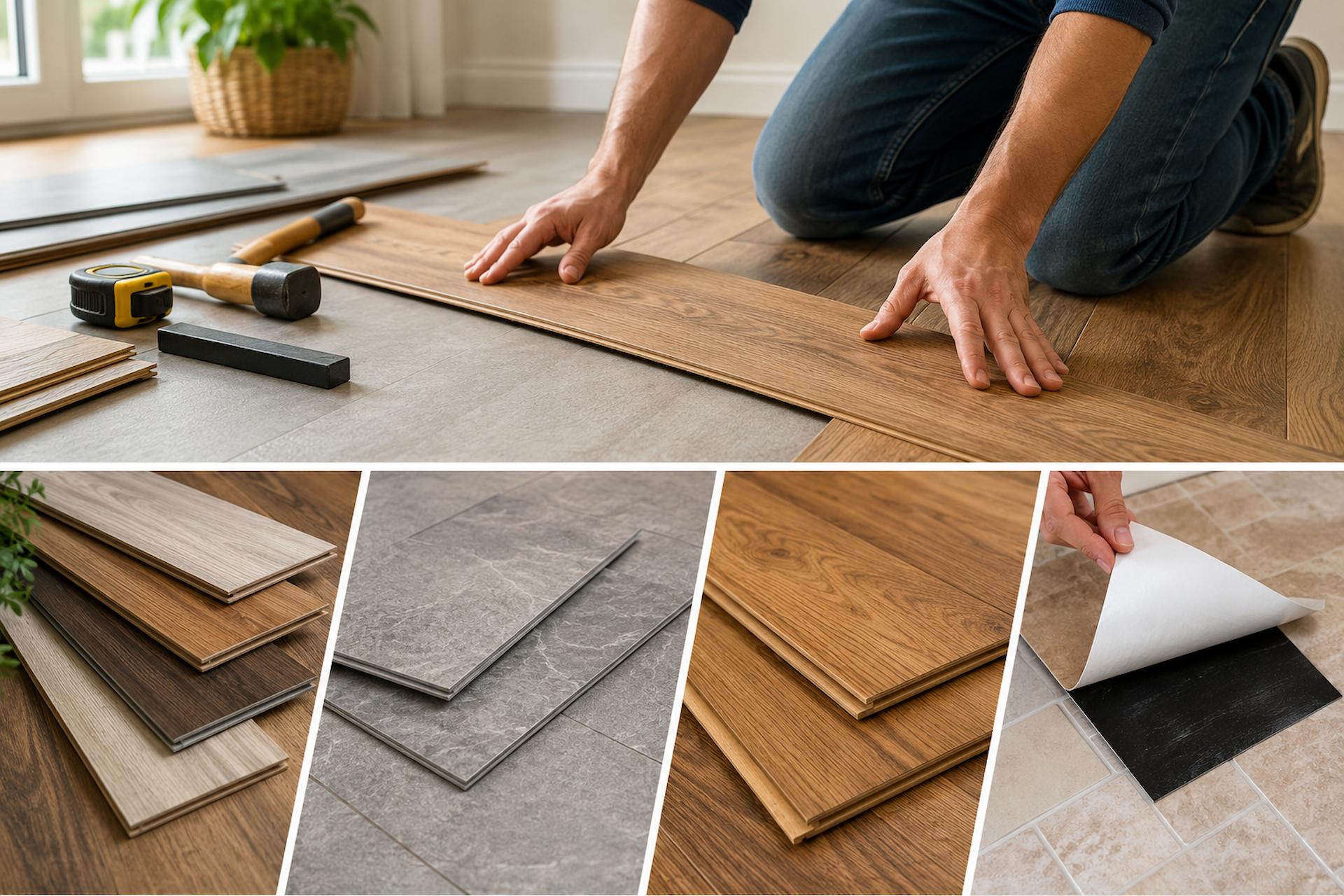
Laminate flooring remains one of the most popular DIY flooring choices because it combines affordability, durability, and visual appeal. Modern laminate designs closely replicate the appearance of hardwood, stone, and tile while requiring far less maintenance.
Most laminate flooring products feature click-lock installation systems, allowing planks to fit together neatly without glue or nails. This makes installation cleaner, faster, and more approachable for homeowners with limited experience.
Laminate flooring works particularly well in living rooms, bedrooms, hallways, and home offices. Its scratch-resistant surface makes it ideal for busy households with pets or children.
Another major advantage is design variety. Homeowners can choose from rustic oak finishes, contemporary grey tones, or natural wood textures depending on the overall interior style they want to achieve.
However, moisture resistance varies between products. Standard laminate flooring may not perform well in bathrooms or laundry rooms unless specifically designed for high-moisture environments.
Choosing quality underlayment can also improve comfort, insulation, and sound reduction.
3. Vinyl Plank Flooring: Durable Enough for Everyday Life
Luxury vinyl plank flooring has quickly become one of the most trusted flooring solutions for modern homes. Homeowners often choose vinyl because it delivers excellent durability, water resistance, and low maintenance.
Vinyl plank flooring performs especially well in kitchens, bathrooms, basements, and utility rooms where spills and moisture are more common. Unlike some traditional flooring materials, vinyl handles everyday wear without requiring extensive upkeep.
Modern vinyl flooring also offers highly realistic wood and stone appearances. Many designs are difficult to distinguish from natural materials, allowing homeowners to achieve a premium look at a much lower cost.
One of the biggest advantages of vinyl flooring is its practicality. It resists scratches, handles heavy foot traffic well, and remains comfortable underfoot when paired with quality underlayment.
Many products now include built-in padding layers that improve comfort while reducing installation time.
4. Engineered Wood Flooring: Real Wood with Better Stability
For homeowners who want the beauty of authentic hardwood without some of the maintenance challenges, engineered wood flooring offers a strong alternative.
Engineered wood contains a real wood surface layer supported by a more stable multilayer core. This construction helps reduce expansion and warping caused by humidity and temperature changes.
The result is a floor that combines natural warmth with greater long-term reliability.
Engineered wood flooring works beautifully in lounges, dining rooms, bedrooms, and open-plan living areas. It adds depth, character, and timeless appeal that many homeowners associate with premium interiors.
Although engineered wood usually costs more than laminate or vinyl flooring, many people view it as a worthwhile long-term investment because it enhances both appearance and property value.
Its authentic finish often creates a more luxurious and welcoming atmosphere throughout the home.
5. Peel-and-Stick Flooring: Fast and Budget-Friendly
Peel-and-stick flooring has improved dramatically over recent years. Modern products are more attractive, more durable, and far easier to maintain than earlier versions.
This flooring option is ideal for homeowners seeking quick cosmetic improvements without incurring major renovation costs. Installation requires very few tools and can often be completed in a single weekend.
Peel-and-stick flooring works especially well in smaller spaces such as bathrooms, utility rooms, and kitchens, as well as in rental properties. It is also useful for homeowners who want temporary upgrades before larger renovations later.
Proper preparation remains extremely important. Floors must be clean, dry, and level before installation begins.
Even affordable flooring can look polished and professional when installed carefully.
6. Why Proper Floor Preparation Matters
One of the most common DIY flooring mistakes is underestimating the importance of preparation. Even expensive flooring materials can fail if installed over uneven or damaged surfaces.
Before installation starts, subfloors should always be inspected for cracks, moisture issues, loose boards, or uneven areas. Addressing these problems early prevents shifting, creaking, and visible imperfections later.
Accurate measurements are equally important. Ordering slightly more material than required allows for cuts, mistakes, and future repairs.
Many flooring materials also need time to adjust to room conditions before installation. This acclimation process helps prevent future expansion and contraction problems.
Careful preparation creates smoother installation and far more professional-looking results.
7. How Flooring Impacts Comfort and Energy Efficiency
Flooring influences much more than visual appearance. It also affects comfort, insulation, acoustics, and energy efficiency.
Some flooring materials feel warmer underfoot, while others help reduce noise levels between rooms. Underlayment can further improve insulation and create a quieter living environment.
Vinyl and laminate flooring, paired with quality underlayment, often strike a strong balance between affordability and comfort. Engineered wood adds natural warmth that helps rooms feel more inviting.
The right flooring choice can improve everyday living while reducing maintenance frustrations over time.
Choosing flooring suited to room usage and household needs helps homeowners achieve better long-term satisfaction.
8. Balancing Budget, Durability, and Long-Term Value
Every flooring material offers different strengths, which is why choosing the right option requires careful planning.
Laminate flooring provides affordability and style. Vinyl plank flooring offers exceptional moisture resistance and durability. Engineered wood delivers authentic beauty and long-term value. Peel-and-stick flooring offers fast, affordable visual improvements.
Instead of focusing only on upfront costs, homeowners should also consider durability, maintenance needs, and expected lifespan.
Spending slightly more on higher-quality flooring can often reduce future repair and replacement expenses.
Well-installed flooring improves not only aesthetics but also the overall functionality and value of a property.
Final Thoughts
DIY flooring projects offer homeowners a practical and cost-effective way to upgrade their homes without major disruption or excessive spending. Modern flooring products have made installation more accessible, allowing people to achieve stylish, durable results with minimal effort.
The most successful flooring upgrades begin with thoughtful planning, realistic budgeting, and proper preparation. Understanding how each material performs in real-life conditions helps homeowners make smarter long-term decisions.
Whether updating one room or gradually renovating an entire property, the right flooring can completely transform the comfort, appearance, and usability of a home.