A clean HVAC filter does far more than trap dust. It improves airflow, supports healthier indoor air, lowers energy costs, and helps heating and cooling systems run more efficiently. This guide explains why regular filter replacement matters, how often filters should be changed, and how choosing the right filter can protect both your comfort and your HVAC system for years to come.
Your HVAC system works hard throughout the year to keep your home comfortable. Whether it is heating during winter or cooling during summer, every part of the system depends on proper airflow to function efficiently. One of the smallest components — the air filter — plays one of the biggest roles in overall performance.
Many homeowners overlook HVAC filter replacement because it seems minor compared to larger maintenance tasks. However, a dirty or clogged filter can reduce indoor air quality, increase energy bills, strain system components, and shorten the lifespan of the entire heating and cooling system.
Understanding how HVAC filters work and knowing when to replace them can help maintain a cleaner home, healthier air, and a more efficient HVAC system.
Why HVAC Filters Are So Important
HVAC filters are designed to trap dust, dirt, pollen, pet dander, and airborne particles before they circulate through your home. At the same time, they protect the internal parts of the HVAC system from buildup that can reduce performance.
When filters become clogged, airflow becomes restricted. This forces the system to work harder to move air through vents and ducts. Over time, that extra strain can lead to higher energy consumption and increased wear on critical components.
A clean filter helps your system:
- Maintain proper airflow
- Improve heating and cooling efficiency
- Reduce indoor allergens
- Keep ductwork cleaner
- Lower energy costs
- Protect HVAC equipment from damage
It is one of the simplest and most affordable ways to support long-term HVAC performance.
How Dirty Filters Affect HVAC Efficiency
Restricted airflow is one of the biggest causes of HVAC inefficiency. When air cannot move freely through the filter, the system compensates by running longer cycles to reach the desired temperature.
This creates several problems.
Increased Energy Usage
A clogged filter makes the blower motor work harder, which increases electricity use. Even a partially blocked filter can noticeably impact monthly utility bills.
Uneven Heating and Cooling
Rooms may feel warmer or cooler than usual because reduced airflow limits how effectively conditioned air travels through the home.
System Overheating or Freezing
Dirty filters can cause heating systems to overheat or air conditioners to freeze due to improper airflow around coils and internal components.
Faster Wear and Tear
Constant strain on fans, motors, and compressors increases the risk of breakdowns and expensive repairs.
Replacing filters regularly helps prevent these issues from becoming costly problems.
The Connection Between HVAC Filters and Indoor Air Quality
Indoor air quality has become a growing concern for many households, especially those with allergies, asthma, pets, or respiratory sensitivities.
HVAC Filter Replacement plays an important role in maintaining healthier indoor air and improving overall system performance. HVAC filters help reduce airborne contaminants by trapping particles before they circulate through living spaces.
Poor indoor air quality may contribute to:
- Increased allergy symptoms
- Dust buildup around the home
- Lingering odours
- Respiratory irritation
- Reduced comfort indoors
Clean filters support healthier indoor environments by helping remove common pollutants from the air you breathe every day.
How Often Should HVAC Filters Be Replaced?
There is no single replacement schedule that works for every household. The ideal timing depends on several factors, including filter type, home size, occupancy, pets, and system usage.
Here are general guidelines homeowners can follow:
| Filter Type | Typical Replacement Frequency |
|---|---|
| Basic fiberglass filters | Every 30 days |
| Pleated filters | Every 60–90 days |
| High-efficiency filters | Every 6–12 months |
| Homes with pets | Every 30–60 days |
| Allergy-sensitive households | Every 30–45 days |
If your HVAC system runs frequently during extreme weather, its filters may need to be replaced more often.
Checking the filter monthly is the easiest way to monitor its condition.
Signs Your HVAC Filter Needs Replacement
Some filters become dirty gradually, making it easy to miss the warning signs. Knowing what to watch for can help prevent airflow and performance issues.
Common Signs Include:
- Visible Dust and Dirt
If the filter appears grey, dusty, or clogged, it is time to replace it. - Weak Airflow
Reduced airflow from vents often indicates restricted circulation. - Higher Energy Bills
Unexpected increases in heating or cooling costs may point to reduced efficiency. - More Dust Indoors
Dirty filters allow more particles to circulate throughout the home. - Increased Allergy Symptoms
Poor filtration can worsen indoor allergens and irritants. - Longer HVAC Cycles
Systems that run longer than normal may be struggling with airflow restrictions.
Replacing the filter early is always better than waiting until problems become noticeable.
Understanding Different HVAC Filter Types
Not all HVAC filters offer the same level of performance. Choosing the right filter depends on your system requirements and household needs.
Fibreglass Filters
These are the most affordable options and primarily protect HVAC equipment from large debris. They provide limited air filtration and may not capture smaller particles effectively.
Pleated Filters
Pleated filters offer improved filtration and better airflow balance. They are one of the most popular choices for residential HVAC systems because they trap smaller particles while maintaining efficiency.
HEPA Filters
High-Efficiency Particulate Air (HEPA) filters capture extremely fine particles, including allergens and microscopic pollutants. However, not all residential HVAC systems are designed to handle HEPA filters due to airflow resistance.
Washable Filters
Reusable filters can be cleaned instead of replaced. While convenient, they require consistent maintenance to remain effective.
What MERV Ratings Mean
MERV stands for Minimum Efficiency Reporting Value. It measures how effectively a filter captures airborne particles.
Higher MERV ratings provide stronger filtration but may also reduce airflow if the HVAC system is not designed for denser filters.
General MERV Guidelines
- MERV 1–4: Basic dust protection
- MERV 5–8: Standard residential filtration
- MERV 9–12: Improved filtration for allergies and pets
- MERV 13+: Advanced filtration for smaller airborne particles
Most residential systems perform well with filters rated between MERV 8 and MERV 11.
Always check the manufacturer’s recommendations before upgrading the filter strength.
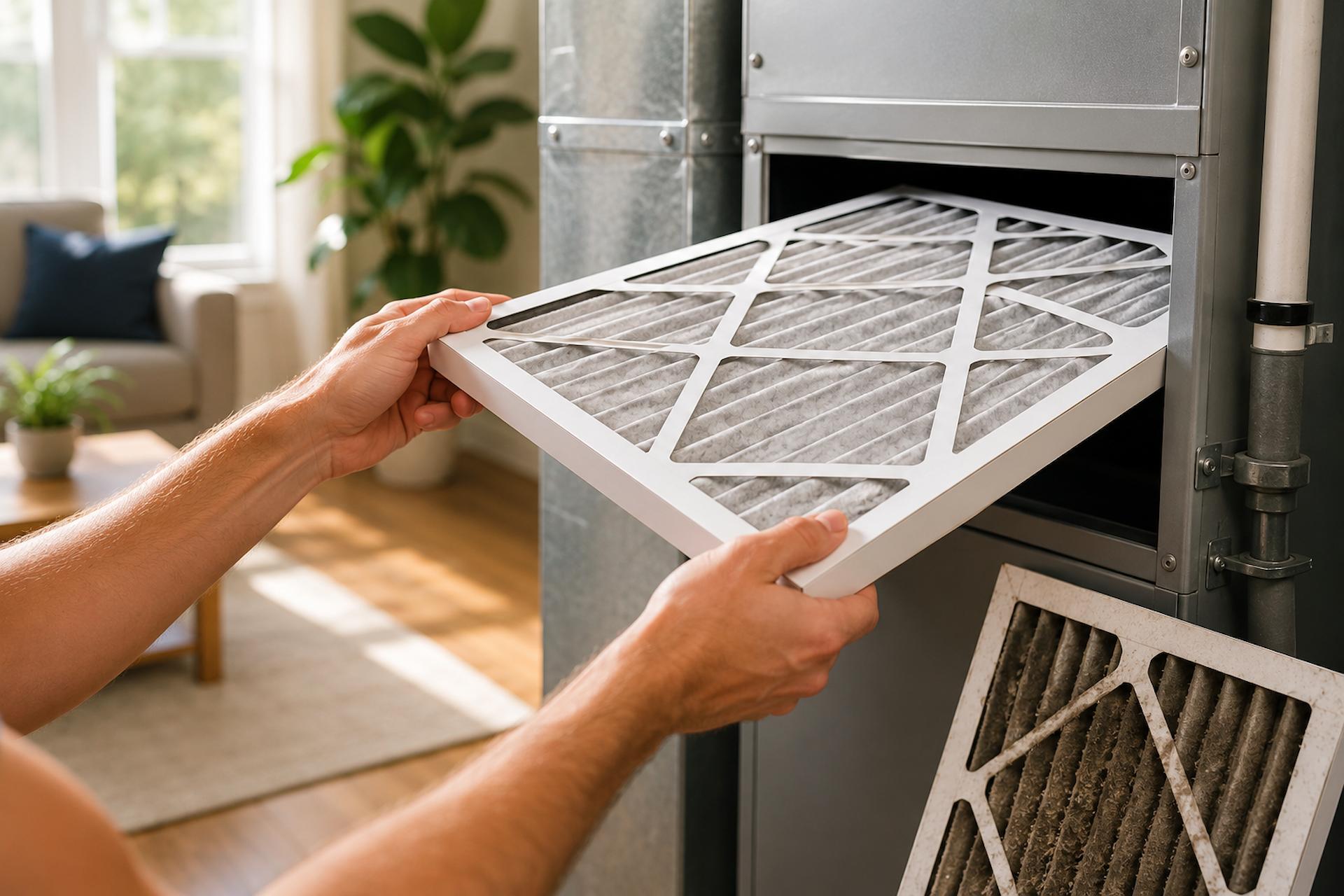
Simple Steps for Replacing an HVAC Filter
Changing an HVAC filter is usually straightforward and only takes a few minutes.
Basic Replacement Process
- Turn off the HVAC system
- Locate the filter compartment
- Remove the old filter carefully
- Check the airflow direction arrow on the new filter
- Insert the new filter correctly
- Restart the system
Keeping replacement filters on hand makes regular maintenance easier to remember.
Wrapping Up
HVAC filter replacement is one of the simplest yet most valuable steps homeowners can take to maintain comfort, improve indoor air quality, and protect heating and cooling systems. Clean filters allow proper airflow, reduce strain on equipment, and help systems operate more efficiently throughout the year.
By understanding filter types, replacement schedules, and airflow needs, homeowners can make better maintenance decisions that support both system performance and healthier living spaces. Consistent filter care not only improves day-to-day comfort but also helps extend the lifespan of the entire HVAC system while keeping energy costs under control.