A beautiful garden is about more than plants and flowers. The elements that connect, support, and frame those plants often have the biggest impact on how the space feels. Garden pathways, water features, and rock gardens bring structure, texture, and personality to outdoor spaces while making them more practical and enjoyable.
Thoughtfully designed hardscaping creates a sense of balance. It guides visitors through the landscape, highlights focal points, and adds visual interest throughout the year—even when plants are dormant. Whether you’re designing a small backyard retreat or a large landscape, the right combination of hardscape elements can completely transform your garden.
This guide explores how to design attractive pathways, calming water features, and natural-looking rock gardens that work together to create an outdoor space filled with character.
What Is Hardscaping?
Hardscaping refers to the non-living elements of landscape design. These permanent features provide structure and functionality while complementing the natural beauty of plants.
Common hardscaping elements include:
- Garden pathways
- Patios
- Stone walls
- Water features
- Rock gardens
- Steps
- Decorative gravel
- Garden edging
- Bridges
- Outdoor seating areas
Unlike plants that change with the seasons, hardscape features remain consistent and create the foundation for the entire landscape.
Why Hardscaping Matters in Garden Design
Good hardscaping improves both the appearance and usability of a garden.
Benefits include:
- Creates clear walking routes
- Improves accessibility
- Reduces soil erosion
- Helps manage drainage
- Adds texture and contrast
- Defines different outdoor zones
- Increases property appeal
- Requires relatively low maintenance
The goal isn’t to replace greenery but to create harmony between natural and built elements.
Designing Beautiful Garden Pathways
A pathway does much more than connect one area to another. It encourages exploration and shapes how visitors experience the garden.
Start with the Purpose
Think about how the path will be used.
Examples include:
- Main walkway to the entrance
- Path leading to a seating area
- Route through flower beds
- Access to a vegetable garden
- Connecting multiple outdoor spaces
Frequent-use paths should be wider and more durable than decorative garden trails.
Choose the Right Path Material
Different materials create different moods.
Natural Stone
Natural stone offers a timeless appearance that blends beautifully with almost any landscape.
Advantages:
- Long-lasting
- Elegant
- Natural texture
- Works in traditional and modern gardens
Gravel
Gravel pathways are affordable and easy to install.
Benefits include:
- Excellent drainage
- Casual appearance
- Easy repairs
- Various colors available
Adding edging helps keep gravel neatly contained.
Brick
Brick creates warmth and classic charm.
Ideal for:
- Cottage gardens
- Colonial homes
- Formal landscapes
Brick patterns such as herringbone or basket weave add extra visual appeal.
Concrete Pavers
Pavers come in many sizes, shapes, and finishes.
They offer:
- Uniform appearance
- High durability
- Easy replacement
- Flexible design options
Wooden Walkways
Wood works especially well around ponds, shaded gardens, and natural landscapes.
Choose weather-resistant hardwoods or composite materials for longer life.
Pathway Design Tips
A well-designed path feels inviting rather than forced.
Keep these principles in mind:
- Create gentle curves instead of unnecessary sharp angles.
- Match the path width to its intended use.
- Use edging for clean lines.
- Add lighting for evening safety.
- Blend the pathway with surrounding plants.
- Avoid overly complicated layouts.
Curved pathways often make gardens feel larger and more natural.
Using Plants Along Garden Paths
Plants soften hard surfaces and create a welcoming atmosphere.
Consider combining:
- Ground covers
- Ornamental grasses
- Lavender
- Hostas
- Ferns
- Flowering perennials
- Small shrubs
Layering plants of different heights creates depth without making pathways feel crowded.
Adding Water Features for Movement and Calm
Water brings life to a garden. The sound of flowing water creates a peaceful atmosphere while attracting birds and beneficial wildlife.
Even small water features can become the focal point of an outdoor space.
Types of Garden Water Features
Garden Fountains
Fountains fit gardens of almost every size.
Popular styles include:
- Modern stone fountains
- Tiered fountains
- Wall-mounted fountains
- Bowl fountains
They require relatively little space while providing relaxing sounds.
Garden Ponds
Ponds create natural ecosystems.
You can include:
- Aquatic plants
- Water lilies
- Fish
- Floating plants
- Decorative stones
Careful planning ensures healthy water quality and easier maintenance.
Waterfalls
Waterfalls introduce movement and visual drama.
They work particularly well when paired with:
- Natural rocks
- Garden streams
- Woodland landscapes
- Pond systems
Flowing water also helps circulate pond water naturally.
Bubbling Rock Features
A bubbling rock combines natural stone with a hidden water pump.
Benefits include:
- Minimal maintenance
- Safe for families
- Compact footprint
- Natural appearance
These are ideal for smaller gardens.
Planning a Water Feature
Before installation, consider:
- Available sunlight
- Nearby trees
- Electrical access
- Water supply
- Drainage
- Seasonal weather
- Maintenance requirements
Avoid placing ponds directly beneath large trees, where falling leaves can increase cleaning needs.
Making Water Features Feel Natural
The most attractive water features blend seamlessly into the landscape.
Use:
- Large natural stones
- River rocks
- Native plants
- Moss
- Ferns
- Low-growing ground covers
Avoid placing decorative elements too symmetrically. Nature rarely follows perfectly straight lines.
Designing Attractive Rock Gardens
Rock gardens combine stone, texture, and drought-tolerant plants to create landscapes with year-round interest.
They work especially well in:
- Sloped yards
- Dry climates
- Small spaces
- Modern gardens
- Alpine-inspired landscapes
Rock gardens reduce maintenance while adding visual structure.
Choosing the Right Rocks
The choice of stone influences the overall style.
Popular options include:
- Limestone
- Granite
- Sandstone
- Slate
- River rocks
- Boulders
Using one primary rock type usually creates a more cohesive appearance than mixing many different stones.
Selecting Plants for Rock Gardens
Rock garden plants should complement the stone rather than overpower it.
Excellent choices include:
- Sedum
- Creeping thyme
- Sempervivum
- Dianthus
- Lavender
- Ornamental grasses
- Small succulents
- Dwarf conifers
These plants thrive in well-drained soil while providing seasonal color and texture.
Building a Natural-Looking Rock Garden
The best rock gardens look as though they have always belonged in the landscape.
Tips include:
- Partially bury large rocks.
- Group stones naturally.
- Vary rock sizes.
- Leave planting pockets.
- Use gravel mulch.
- Repeat plant varieties throughout the design.
Avoid arranging rocks in perfectly straight rows.
Combining Pathways, Water Features, and Rock Gardens
The strongest landscapes connect hardscape elements into one unified design.
For example:
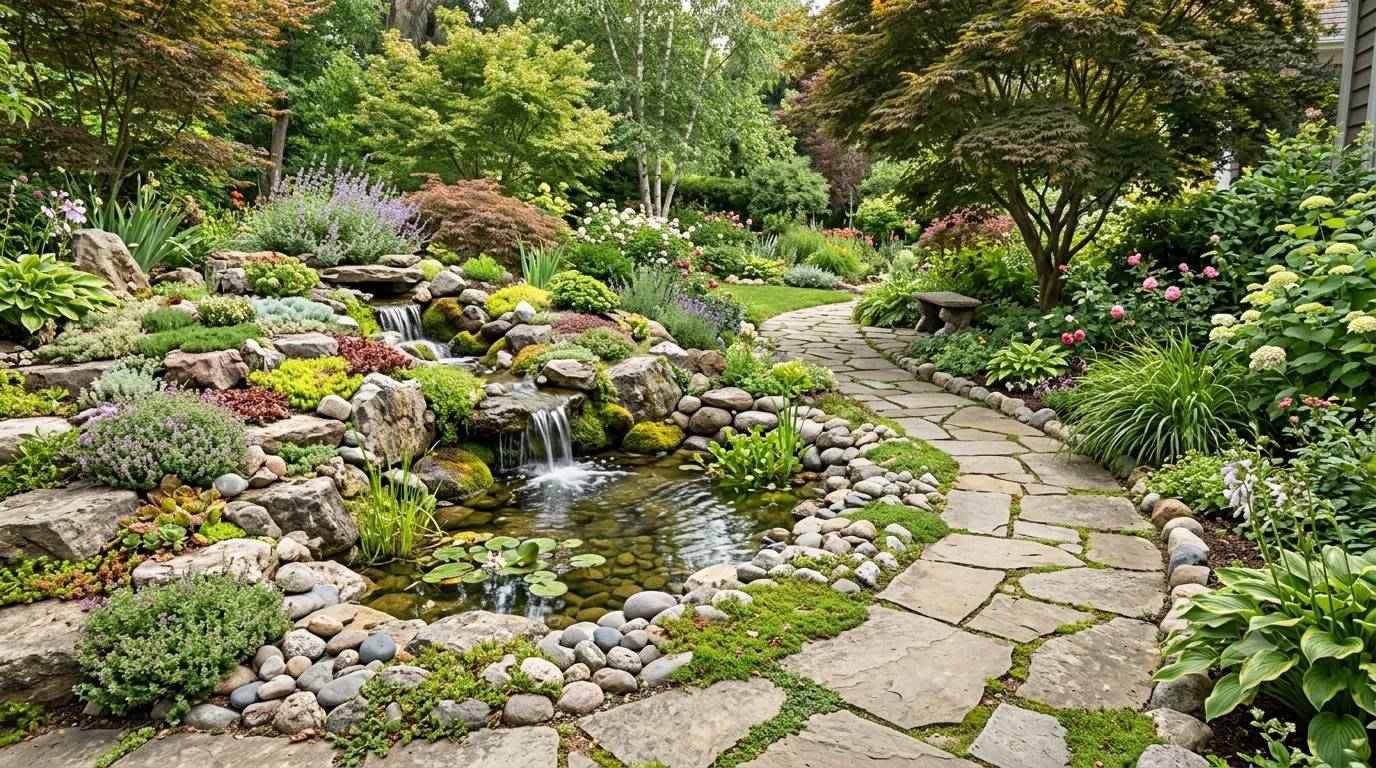
- A curved stone path leading to a pond.
- A bubbling fountain surrounded by ornamental grasses.
- A rock garden bordering a gravel walkway.
- A seating area overlooking a waterfall.
- Stepping stones crossing a dry creek bed.
Each feature should feel connected rather than isolated.
Lighting Your Hardscape
Outdoor lighting extends the enjoyment of your garden after sunset.
Consider adding:
- Path lights
- Spotlights on specimen rocks
- Underwater pond lighting
- Soft accent lighting
- Step lighting
Warm lighting creates a comfortable, inviting atmosphere without overpowering the landscape.
Choosing Sustainable Hardscaping Materials
Environmentally conscious landscaping benefits both your garden and the surrounding ecosystem.
Sustainable choices include:
- Locally sourced stone
- Recycled pavers
- Permeable paving
- Rainwater-fed water features
- Native plants
- Solar-powered lighting
These options often reduce long-term maintenance while supporting better water management.
Common Hardscaping Mistakes to Avoid
Even quality materials can fall short without thoughtful planning.
Avoid these common mistakes:
- Building pathways that are too narrow
- Installing oversized water features in small gardens
- Mixing too many materials
- Ignoring drainage
- Overcrowding rocks with plants
- Forgetting long-term maintenance
- Creating disconnected landscape features
Keeping the design simple usually results in a more elegant and functional garden.
Maintaining Your Hardscape
Routine care keeps outdoor spaces looking their best.
Maintenance includes:
- Sweeping pathways
- Removing weeds
- Cleaning fountains
- Checking water pumps
- Replacing damaged stones
- Refreshing gravel
- Trimming nearby plants
- Inspecting drainage after heavy rain
Small maintenance tasks completed regularly prevent larger repairs later.
Frequently Asked Questions
What is the best material for a garden pathway?
Natural stone, gravel, brick, and concrete pavers are all excellent choices. The best option depends on your budget, garden style, maintenance preferences, and climate.
Are water features difficult to maintain?
Not necessarily. Small fountains and bubbling rock features require less maintenance than larger ponds. Regular cleaning and pump inspection usually keep them running efficiently.
What plants grow well in rock gardens?
Sedum, creeping thyme, sempervivum, lavender, dianthus, ornamental grasses, and dwarf conifers are popular because they thrive in well-drained soil and require minimal care.
Can a small garden include all three features?
Yes. A compact space can include a narrow pathway, a small fountain or bubbling rock, and a modest rock garden without feeling crowded. Careful planning and appropriate sizing are key.
How do I make my hardscaping look natural?
Use curved pathways, locally sourced stone, varied rock sizes, native plants, and organic layouts. Avoid overly symmetrical designs and let the landscape flow naturally.
Conclusion
Garden pathways, water features, and rock gardens each bring something unique to an outdoor space, but together they create a landscape with lasting beauty, comfort, and character. Pathways invite exploration, water adds movement and tranquility, and rock gardens provide texture and year-round structure. When thoughtfully planned, these hardscape elements blend naturally with plants to create a balanced landscape that feels both welcoming and timeless. By choosing quality materials, designing with purpose, and maintaining each feature regularly, you can build a garden that not only looks stunning but also remains functional and enjoyable for years to come.